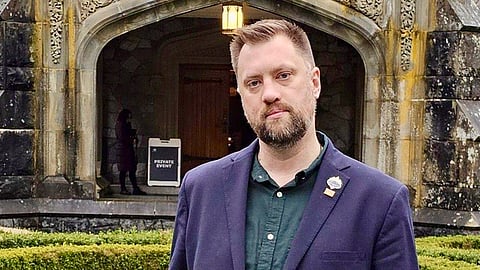

This week, I am walking into my first Conservative Party of Canada convention.
That is not something I would have expected to write even a few years ago.
For more than two decades, I was deeply and publicly involved in the NDP. I wasn’t a casual supporter. I served on executives, managed campaigns and helped shape strategy. I believed in the project, the people and the promise. That chapter of my life mattered, and I don’t disown it.
But political loyalty is not an end in itself. It has to be sustained by honesty — both institutional and personal. Over time, that honesty became harder to find.
Gradually, the internal space for disagreement narrowed. Certain positions hardened into doctrine. Certain questions became unwelcome. Conversations that once felt open and rigorous began to feel managed. On issues that mattered deeply to me — including antisemitism, economic realism and institutional accountability — raising concerns increasingly came with the expectation that they be softened, deferred or handled quietly.
Antisemitism, in particular, was the breaking point.
Watching it be minimized, rationalized or strategically sidestepped inside spaces that claimed to stand for inclusion made it impossible to keep pretending everything was fine. When a political movement struggles to clearly name antisemitism as a problem — or treats it as an awkward complication rather than a moral and civic failure to be confronted directly — that reveals something fundamental about its priorities.
I tried to work through this from the inside. That is what you do when you have committed years of your life to a political project. But eventually it became clear that staying meant saying things I no longer believed, or remaining silent when silence itself felt like a form of complicity.
Leaving was not dramatic. It was quiet. And it was difficult.
What forced the break was not anger or exhaustion, but clarity — about what I could no longer ignore, excuse or explain away.
Walking into this convention is not about switching teams or settling scores. It is about being honest about where I am now, and why.
Political movements ultimately reveal themselves not by the language they repeat, but by the problems they are willing to confront clearly — and the ones they avoid. When antisemitism, economic reality and institutional failure are treated as inconveniences rather than responsibilities, something essential has been lost.
Leaving a political home after decades is not a casual act. It is the result of paying attention, over time, to misalignments that grow harder to deny. For me, this moment is less about arrival than about clarity.
That clarity matters beyond any single party or convention. A healthy democracy depends on people being able to say, without fear or pretence, when a political movement has drifted too far from the values it claims to uphold — and having the courage to act on that recognition.
