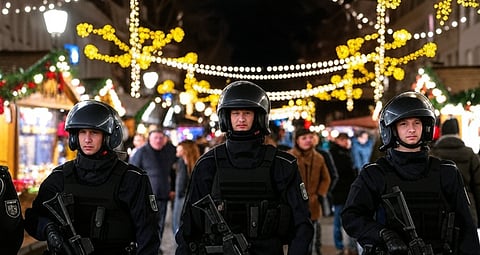

Concrete barriers, armed patrols and bag checks have become as common as mulled wine at Europe’s Christmas markets, a direct response to persistent Islamist terror threats.
Germany’s domestic intelligence service rates the risk of attack as “absolutely high,” with seasonal markets seen as symbolic soft targets (Federal Office for the Protection of the Constitution/dpa).
The 2016 Berlin truck attack that killed 12 and last December’s Magdeburg ramming that left six dead and more than 300 injured remain stark reminders (German federal prosecutors/Reuters).
Security costs have skyrocketed — Bremen alone budgeted €3 million for barriers, cameras and private guards this year (Weser-Kurier). Smaller communities such as Overath and Kerpen cancelled their markets, citing unaffordable protection measures (Kölner Stadt-Anzeiger/Rheinische Post).
France is maintaining its highest terror alert and stands ready to deploy soldiers (Interior Ministry/Le Figaro), while Warsaw has ringed its Old Town market with anti-ram barriers (Polish Press Agency) and Vienna has stepped up police presence (Austria Press Agency).
A YouGov survey found 62 per cent of Germans fear a holiday-season attack. Organizers insist the lights will stay on — but now behind a wall of vigilance.
This story does not endorse racism towards Muslims, or any other ethnicity.
