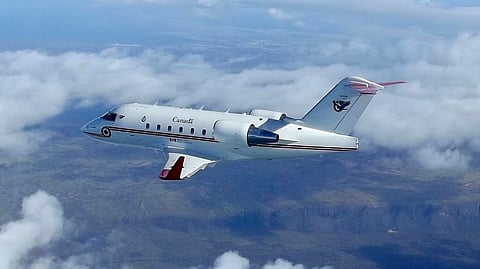

Prime Minister Mark Carney's government jet travel has cost taxpayers an estimated $1.3 million CAD and released approximately 550 tonnes of carbon dioxide since he took office in March 2025, based on over 152,790 kilometres flown by mid-November
Carney, who became Canada's 24th prime minister on March 14, 2025, after Justin Trudeau's resignation and a subsequent Liberal election victory, has used Royal Canadian Air Force VIP aircraft like the CC-144 Challenger and CC-150 Polaris for international trips, including to Egypt for a Mideast peace summit and multiple visits to Europe.
Flight tracker data show 28 trips comprising 68 flights totalling 152,790 km up to November, with additional travel to the UAE and South Africa adding further distance.
Costs are estimated at $6,340 to $11,000 per flight hour for Challenger jets, assuming an average speed of 850 km/h yielding about 180 hours airborne
CO2 estimates draw from similar VIP jet data, around 3.5-3.8 kg per km.
Canada has no direct carbon tax or levy on jet fuel nationwide. The federal consumer fuel charge was eliminated effective April 1, 2025, with rates set to zero (previously, jet fuel had broad exemptions for international/interprovincial flights).
British Columbia's provincial carbon tax was also repealed on April 1, 2025. Quebec's cap-and-trade system imposes indirect carbon costs on fossil fuel distributors, including for aviation fuels consumed in the province, but no separate jet fuel-specific tax exists.
